Why Whimbrels Drop Crabs
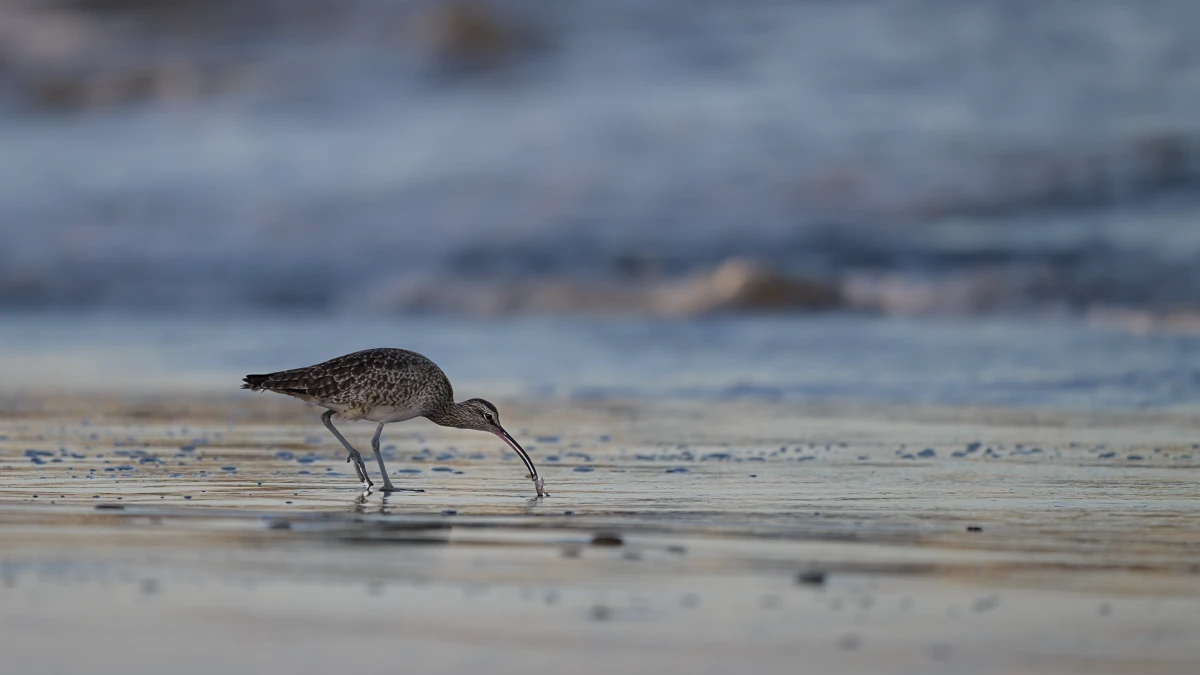
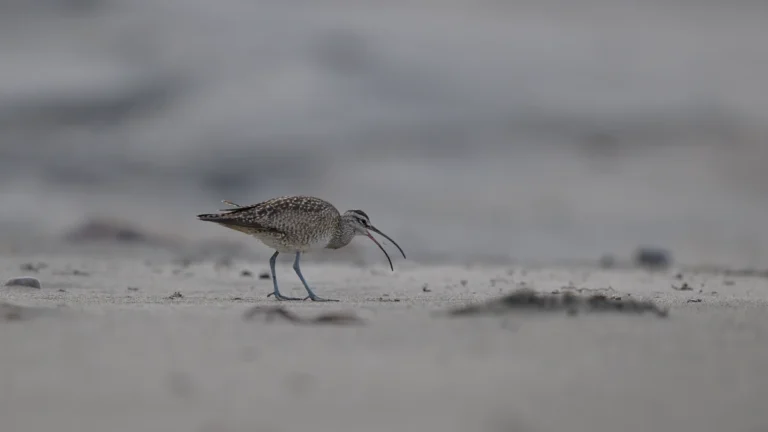
A whimbrel has caught a mole crab, and you can safely bet on what will happen next. As the bird accelerates out of the water, the crab slips from the bird’s bill and hurtles to the sandy beach. It’s an unforced error that gets repeated time and again. Whimbrels drop mole crabs in over 60% of feeding events. The sloppiness with which whimbrels drop mole crabs prompted a field note, and now I have more information on why that happens.
It’s understandable if one were to claim that whimbrels always drop crabs. It isn’t true, but it’s understandable. Conclusions will vary based on when and where the observations occur.
As the tide rises, the smaller mole crabs are either pushed further up the beach or move on their own accord. The larger mole crabs limit how far up the beach they migrate, burying themselves when the tide gets too high. Whimbrels hunt by sight and therefore avoid water beyond a certain depth. The result is that smaller mole crabs make up a larger percentage of the bird’s diet when the tide is higher. At lower tides, the birds eat more of the larger crabs, which are also more difficult to handle.
I observed 200 feeding events and found that whimbrels were far more likely to drop large crabs. 83% of large crab feeding events involved a drop compared to 36% of small crab feeding events. In addition, the number of times a whimbrel dropped an individual crab during a feeding event was over three times higher for large crabs than for small crabs (3.94 vs. 1.23). Viewing whimbrels feeding at lower tides would certainly lead one to believe that whimbrels almost always drop crabs.
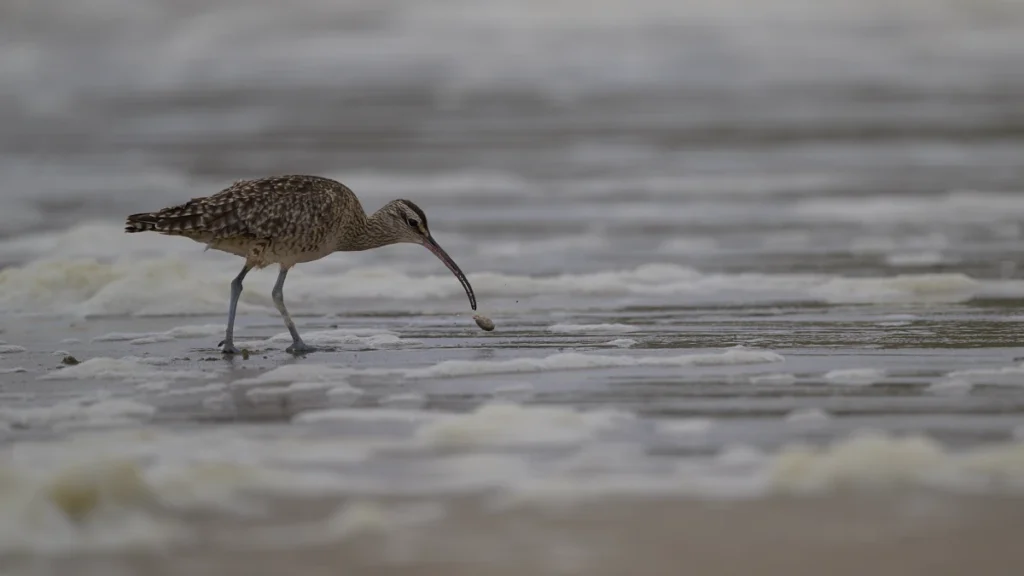
Here are some reasons whimbrels drop crabs:
- The birds want to wash the crabs. I know, that’s more than a bit odd. Remember, whimbrels pull many of these crabs from their burrows in wet sand. The birds then remove the sand by spitting, dropping, or placing the crabs in the shallow water of a receding wave.
- The crabs are simply hard to handle. They have a slippery, hard shell which doesn’t mix well with a whimbrel’s smooth, hardened bill. Any attempt to reposition the crab carries the risk of slippage.
- The whimbrels do mis-toss the crabs. The birds often reposition the crabs for consumption by tossing them into the air and re-catching them closer to their mouths. However, sometimes they miss, and the tossed crab ends up on the sand or back in the water. Wind, poor bill-eye coordination, and distractions all play a part in mis-tosses.
- The birds are rushing to exit the water. If a bird captures a crab in shallow water, it often moves to shore immediately to increase the chances of recovering a dropped crab. Dropping a crab into the water often results in a lost meal. During my observations, the birds recovered only 36% of the crabs dropped into the water.
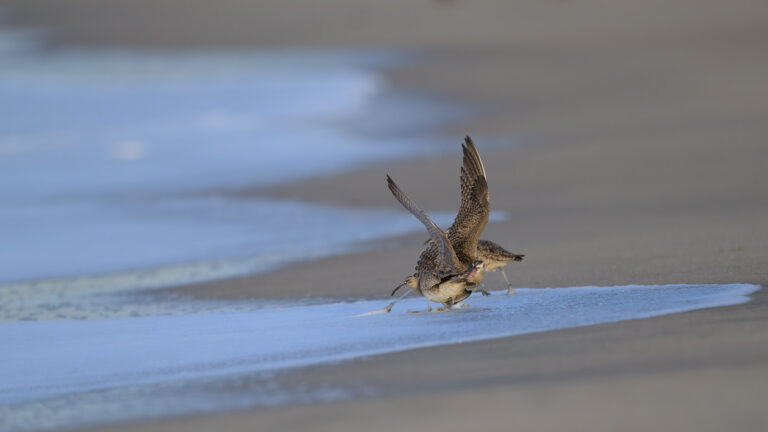
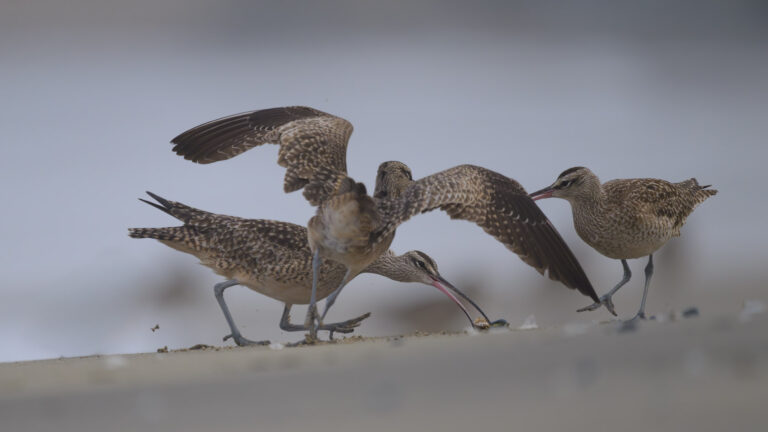
- Whimbrels are seeking to avoid thieves. Whimbrels will challenge each other for food. Especially since they know there’s a good chance of a drop. When foraging within a group, the birds frequently rush to an open area on the beach to feed in peace. Unfortunately, their grip isn’t always as secure as their determination to move away from the flock.