
Acknowledging the Struggle
Issue #7
Featured Story: Acknowledging the Struggle
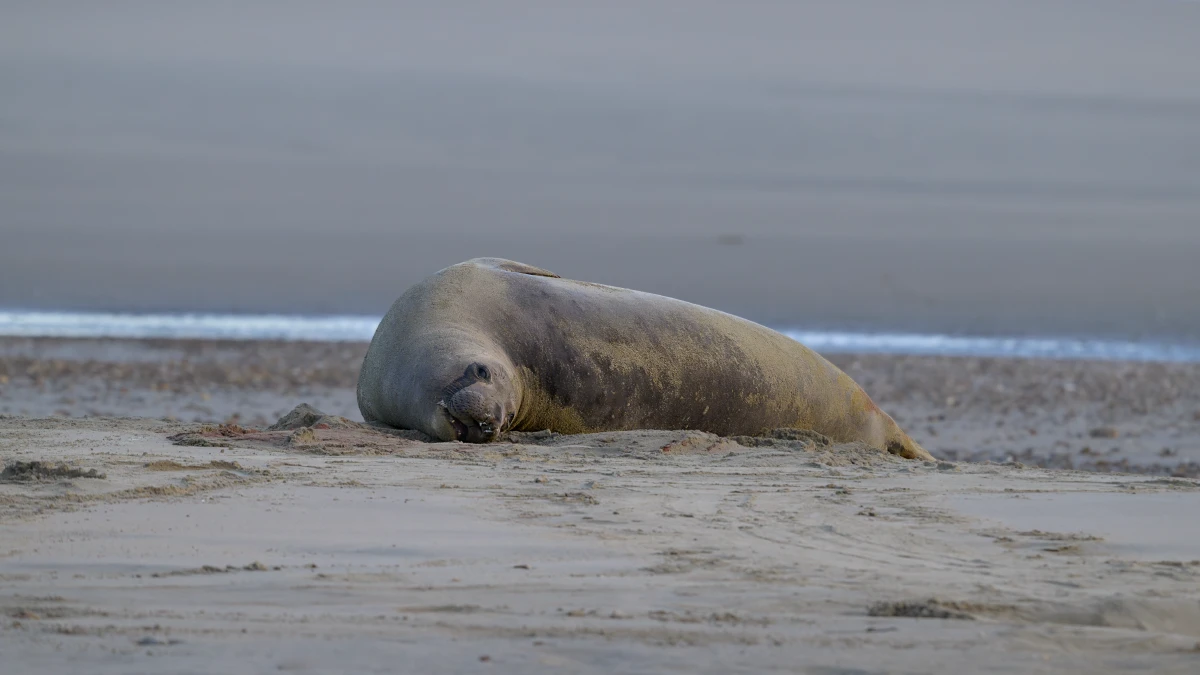
She rested quietly for days, limiting her movement to the occasional flip of sand over her enormous bulk.
In a sudden outburst, her body shuddered. One uncontrolled movement followed another. Her hind flippers rose, twisted, and fell in a tortuous rhythm that divulged her pain. A seal, transformed into 1500 pounds of writhing agony. Her contorted snout emitted strained grunts, incoherent yet understandable to all.
Somewhere in that fury of agitation, new life emerged. A trail of blood left evidence of the birthing process. Exhausted, she laid her head on the bloodied sand. Crashing waves muffled the weak call of her newest priority. Dutifully, she mustered the strength to tilt her body and offer a teat.
The hard work had only just begun.
Field Notes
Elephant seal births are fascinating to watch. Much like humans, there are subtle contractions well ahead of the actual birth. The body shuddering I described above happened occasionally in the hours preceding the birth. The contractions that immediately preceded the birth were unmistakable. It is clearly a struggle, and for anyone with a measure of empathy, it is a bit gut-wrenching to watch.
I found it interesting that the mother turned her body to face the colony of seals further up the beach. I wondered if that was to shield the newborn from the other seals. That doesn’t happen in every case, but it may be the mark of an experienced mother.
If you are interested in seeing an elephant seal birth, now is the time to visit a colony. Año Nuevo, Piedras Blancas, Point Reyes, Channel Islands National Park, and the Punta Gorda lighthouse on the Lost Coast Trail are the most popular colonies in California. Look for seagulls circling above a pregnant female as a sign that a birth may be imminent. The gulls want to eat the afterbirth and seem to know when the birthing process has started.
Updates
I spent most of my field time in January collecting data for a new project about a local whimbrel flock. This work will culminate in one or more in-depth feature articles. Earlier this month, I published a field note on the blog detailing some of my questions. You can expect more of those in the future, as I find it’s a good way to share my questions as I work my way through a project. I also appreciate the feedback I’ve received from those who have reached out.
In Case You Missed It
Featured Post: Explore the struggles elegant tern parents experience when feeding juveniles in one northern California colony.
If you like wildlife micro-dramas and brief explainers: