Why Elegant Terns Attempt to Feed the Wrong Juvenile

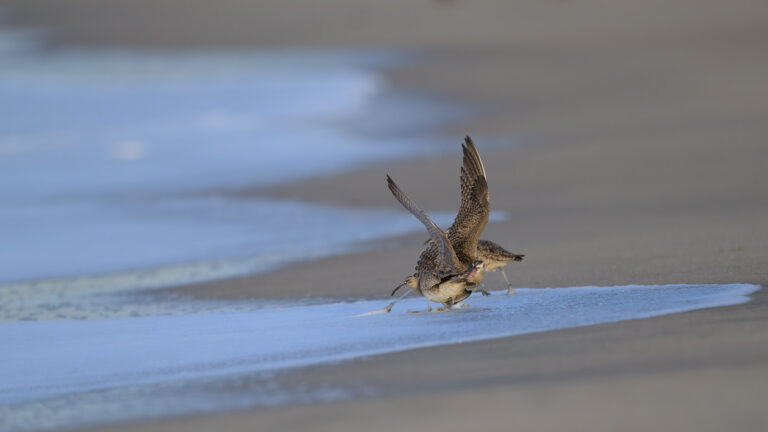
In the story The Fifth Pass, an elegant tern parent mistook a juvenile for its own. Research shows that mistaken feedings are not a common occurrence. In fact, I couldn’t find any peer-reviewed articles that mentioned elegant terns feeding the wrong juveniles. However, my observations show that this was not an unusual event.
Over a period of 4 days, totaling 12 hours, I recorded 9 occurrences where a parent tried to feed the wrong juvenile. That frequency may be low, but it’s far from unprecedented. In fact, that frequency could be understated as I’m only counting the cases in which the parents realized their error and pulled the meal away from the mistaken juvenile. Without banding or other identifiers, it’s almost impossible to determine which parents successfully fed a juvenile that was not their own.
Why Parents Misidentify Juveniles
While elegant terns can recognize the calls of their own juveniles, there are potential explanations for why some parents get confused.
First, as was mentioned in the story, elegant tern colonies are densely populated. On the days I observed the colony, the elegant tern count ranged from 150 to 250 individuals. The colony was mixed with Heerman’s gulls, which ranged from 200 to 500 individuals. With birds constantly vocalizing, this was a chaotic environment that may have impaired the ability of the parents to decipher the calls of a specific juvenile.
Second, any disturbance to the colony caused most of the birds to fly over the ocean and return to the beach, often to a different location. The center of the new location could be anywhere from 5 to 300 feet from the original location. There were also times when the colony became segmented into 2 or 3 subgroups. Those subgroups would combine or reform after each disturbance. If the colony became disturbed while the parents were out fishing, the juveniles would likely be in different locations when the parents returned.
Lastly, juvenile terns are aggressive beggars and will accept food from any adult. If a parent mistook an individual for its own offspring, the begging behavior wouldn’t offer any clues that this was an imposter. Recognition would likely come from visual or verbal clues specific to the individual juvenile. However, with Heerman’s gulls around looking to steal prey, parents may sometimes feel rushed to feed, which could lead to mistaken identities.
Potential Opportunity for More Research
Unfortunately, it’s impossible to say exactly how parents confuse juveniles. More research is needed to answer the question definitively. If you are aware of research that addresses the topic or want to add your own observations, please share in the comments section below or contact me directly. I will update this entry if I receive new information.